

Google Ads vs. Meta Ads in 2026: Which Platform Performs Better?
Google Ads vs. Meta Ads in 2026 — discover which platform delivers better ROI, audience targeting, lead generation, and business growth. Explore the latest trends, AI-powered advertising strategies, and performance insights to choose the right platform for your marketing goals.
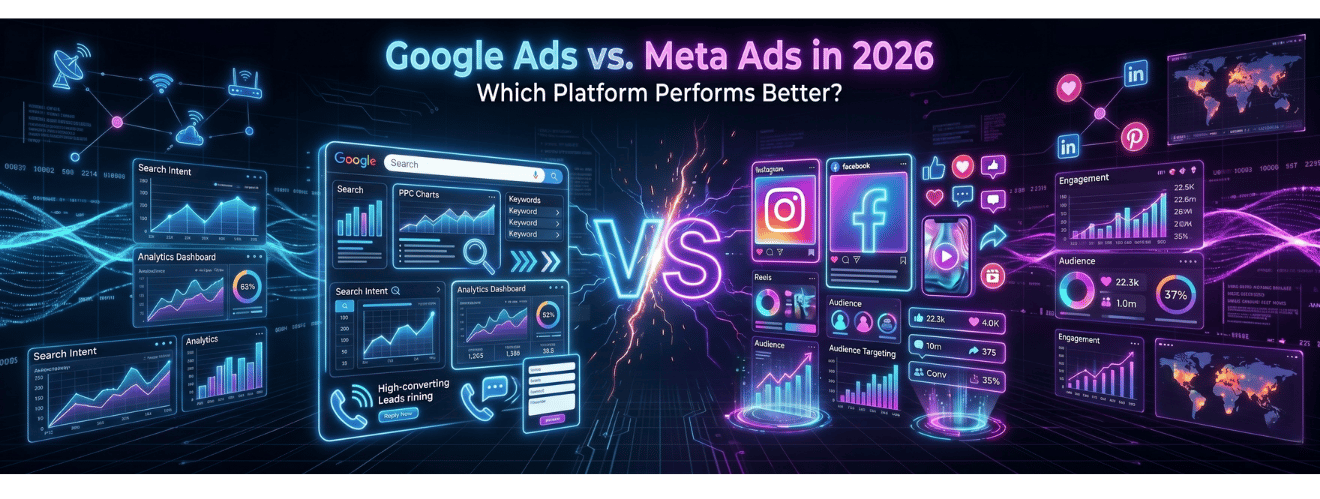
If you're investing in paid media in 2026, two platforms dominate the conversation: Google Ads and Meta Ads (Facebook & Instagram). Together they capture over 50% of global digital ad spend — and for good reason.
But the question every brand asks is: Which one should I invest in?
The honest answer is: it depends. In this comparison, we break down both platforms across targeting, cost, best use cases, and ROI — so you can make a smarter decision about your performance marketing budget.
The Core Difference: Intent vs. Interest
This is the most important distinction between the two platforms:
Google Ads = Intent-Based Marketing People are actively searching for what you offer. They have a need and want a solution right now. Google captures existing demand.
Meta Ads = Interest-Based Marketing People are scrolling through their feeds. They're not necessarily looking to buy — you're reaching them with a compelling offer before they even start searching. Meta creates demand.
This single difference shapes everything — targeting strategy, creative approach, bidding, and which businesses each platform suits best.
Google Ads: Strengths & Best Use Cases
How It Works
Google shows your ads when users search relevant keywords, or as they browse the Google Display Network. In 2025, Performance Max (PMax) campaigns use AI to serve ads across Search, YouTube, Gmail, Shopping, and Display from one campaign.
Key Strengths:
High purchase intent: Captures users ready to buy right now
Massive search volume: 8.5 billion searches processed daily
Google Shopping: Product listing ads with images and prices directly in search results
Smart bidding: Target CPA and Target ROAS bidding strategies optimize automatically
Best For:
Local services (doctors, lawyers, plumbers)
eCommerce with existing product demand
B2B SaaS and services
Finance, travel, and education
Meta Ads: Strengths & Best Use Cases
How It Works
Meta Ads run across Facebook, Instagram, Messenger, and Audience Network. You target users by demographics, interests, behaviors, and custom audiences. Meta's AI then optimizes delivery toward users most likely to take your desired action.
Key Strengths:
Precise audience targeting: Age, location, income, interests, life events, job title
Visual storytelling: Reels and video ads build brand desire and tell compelling stories
Retargeting: Dynamic Product Ads re-engage website visitors with products they viewed
Lookalike audiences: Build audiences that mirror your best customers at scale
Lower entry cost: Generally lower CPMs than Google
Best For:
D2C and eCommerce brands with visual products
Fashion, beauty, food, fitness, and lifestyle
App installs and games
B2C brands targeting specific demographics
Conclusion
Google Ads wins when customers are already searching. Meta Ads wins when you need to reach, persuade, and convert audiences who don't know they need you yet. The smartest brands use both platforms strategically, allocating budget based on their funnel stage, business model, and growth goals.



Your full-service digital growth agency. We help brands across India grow faster, smarter, and more profitably online.
Services
SEO
Digital Marketing
Performance Marketing
Social Media Management
Web Development
SEM / Google Ads
© 2021 Hype & Reach. All rights reserved.